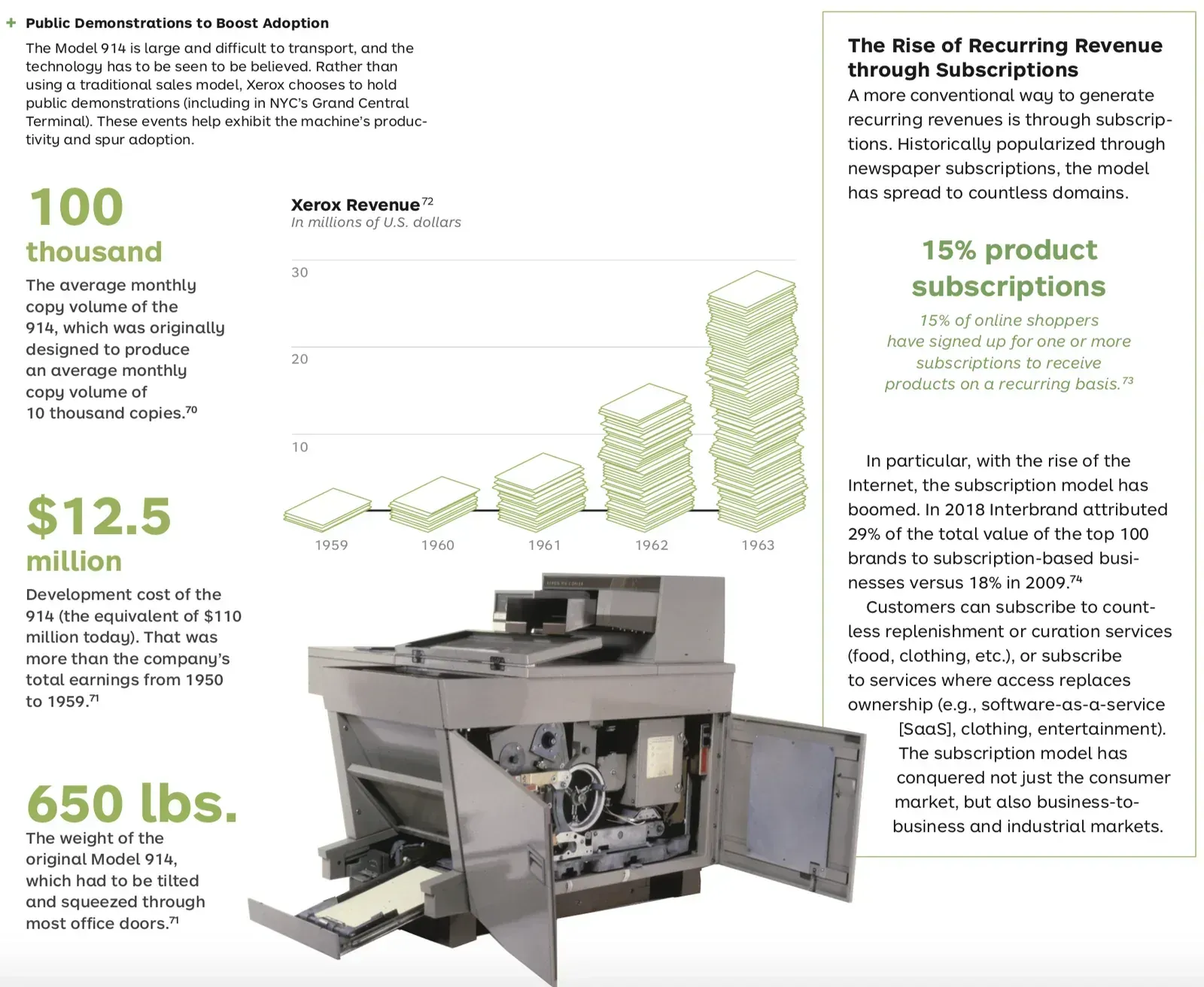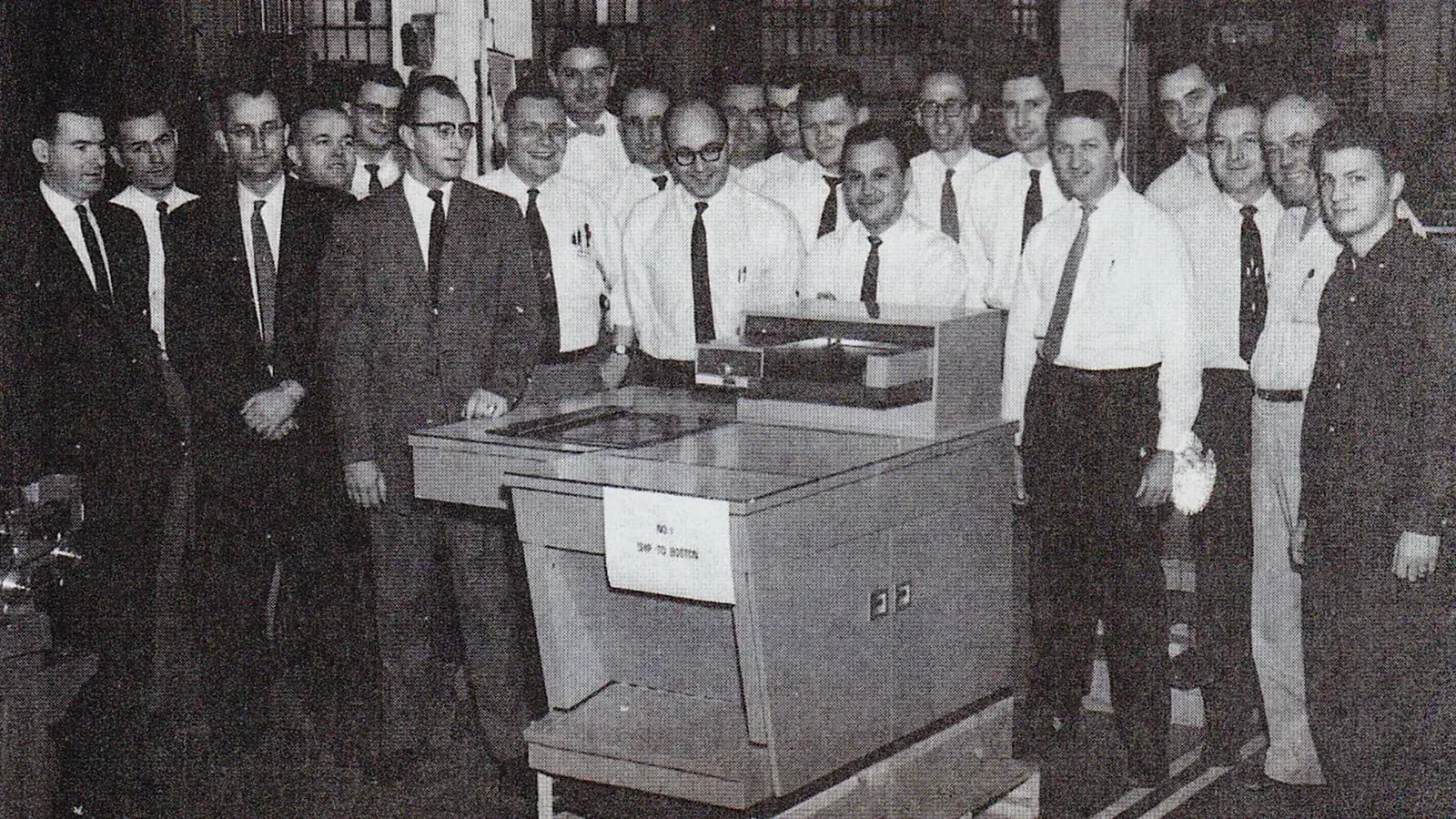
In 1959, Xerox launches the first plain paper photocopier, the Xerox 914. Rather than just selling the machine, they generate long-term, recurring revenues from each photocopy made.
In 1959, Xerox revolutionized access to information by inventing and commercializing the first plain paper photocopy machine, the Xerox 914. The 914 took over a decade and a significant R&D budget to develop.
The machine was revolutionary: averaging 2,000 copies a day or 100 times more than the average business copier at the time.
Because the 914 was expensive, it adopted a leasing model to make it more affordable. Customers were able to cancel the lease with only 15 days’ notice, demonstrating Xerox’s confidence in its value proposition.
Xerox added a pay-per-copy plan in order to monetize what they believed would become a copy addiction, but included the the first 2,000 copies for free. It’s thanks to this innovative business model that earnings from the technology far exceeded earnings had they just sold the machine.
By 1962, the commercial copying business was worth $400 million, up from $40 million a decade before. By then the Xerox name had become synonymous with photocopying.
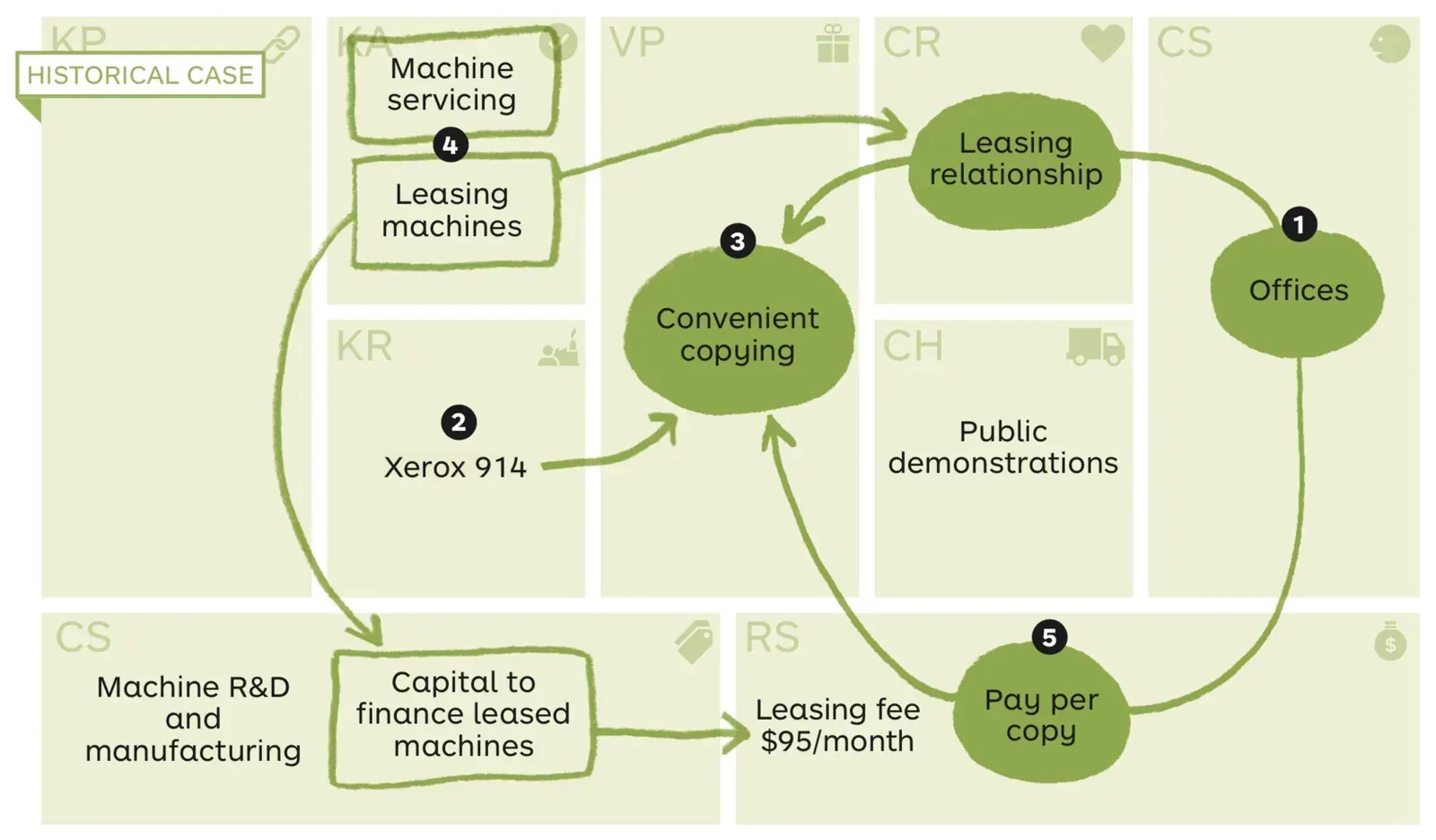
1. Identify recurring job-to-be-done
Chester Carlson, a patent office employee, struggles with the cumbersome job of copying documents. At the time, the average business copier produces 15 to 20 copies per day.
2. Create asset to monetize continuously
To address the challenge, Carlson invents and patents a new technique called xerography. Together with what later becomes Xerox, he develops the first plain paper photocopying machine, the Xerox 914, which averages 2,000 copies per day.
3. Design the value proposition
Xerox believes that once workers become familiar with the power of photocopies, they will be addicted to the convenience and copy more than ever before. Xerox offers the first 2,000 copies for free and a pay-per-copy plan after that.
4. Acquire customers
Xerox recognizes that its copier is too expensive and new for mass adoption. It adopts a leasing model to make the machine affordable and
get it into offices. Instead of Xerox selling it for $29,500, customers lease it for $95 a month.
5. Earn recurring revenue
Each machine is fitted with a counter to tally the monthly usage. After the first 2,000 copies, customers pay 4 cents a copy. This allows Xerox to continuously monetize its value proposition through recurring revenue.