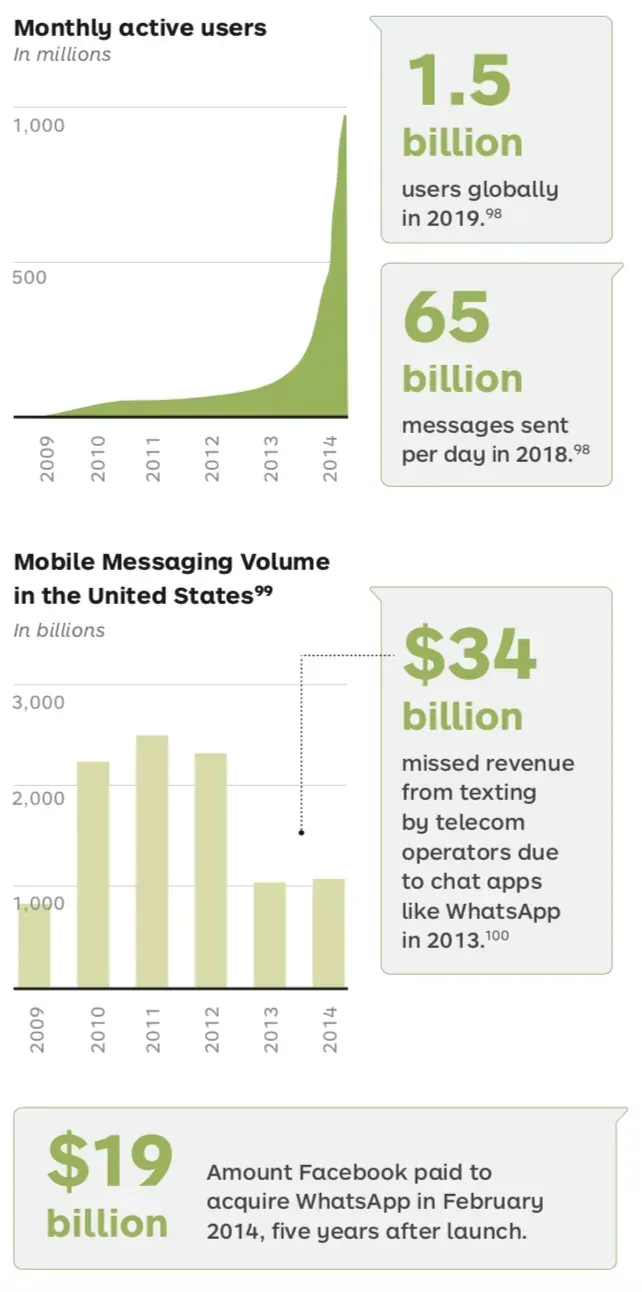
In 2009, Whatsapp launches a device-agnostic free messaging service and platform that disrupts SMS and free desktop messaging.
WhatsApp was originally, in 2009, a status update app before it transformed into a free, unlimited messaging service. The company targeted anyone with a smartphone and an Internet connection, regardless of device and location.
When WhatsApp launched, it disrupted a very competitive messaging market. Text messaging was dominated by paid SMS services by telecom operators and free desktop messaging like Yahoo! Messenger, MSN Messenger, and Skype.
WhatsApp used software and the Internet to externalize the hardware and proprietary infrastructure costs that telecom operators bear in order to offer SMS services. This allowed them to benefit from the growth of smartphone users globally, operate at a radically lower cost structure, and pass on cost savings to users in the form of a free service. In February 2013, WhatsApp serviced 200 million active users with only 50 staff members. By December that year, it had 400 million users.
In 2014, Facebook acquired WhatsApp for more than $19 billion.
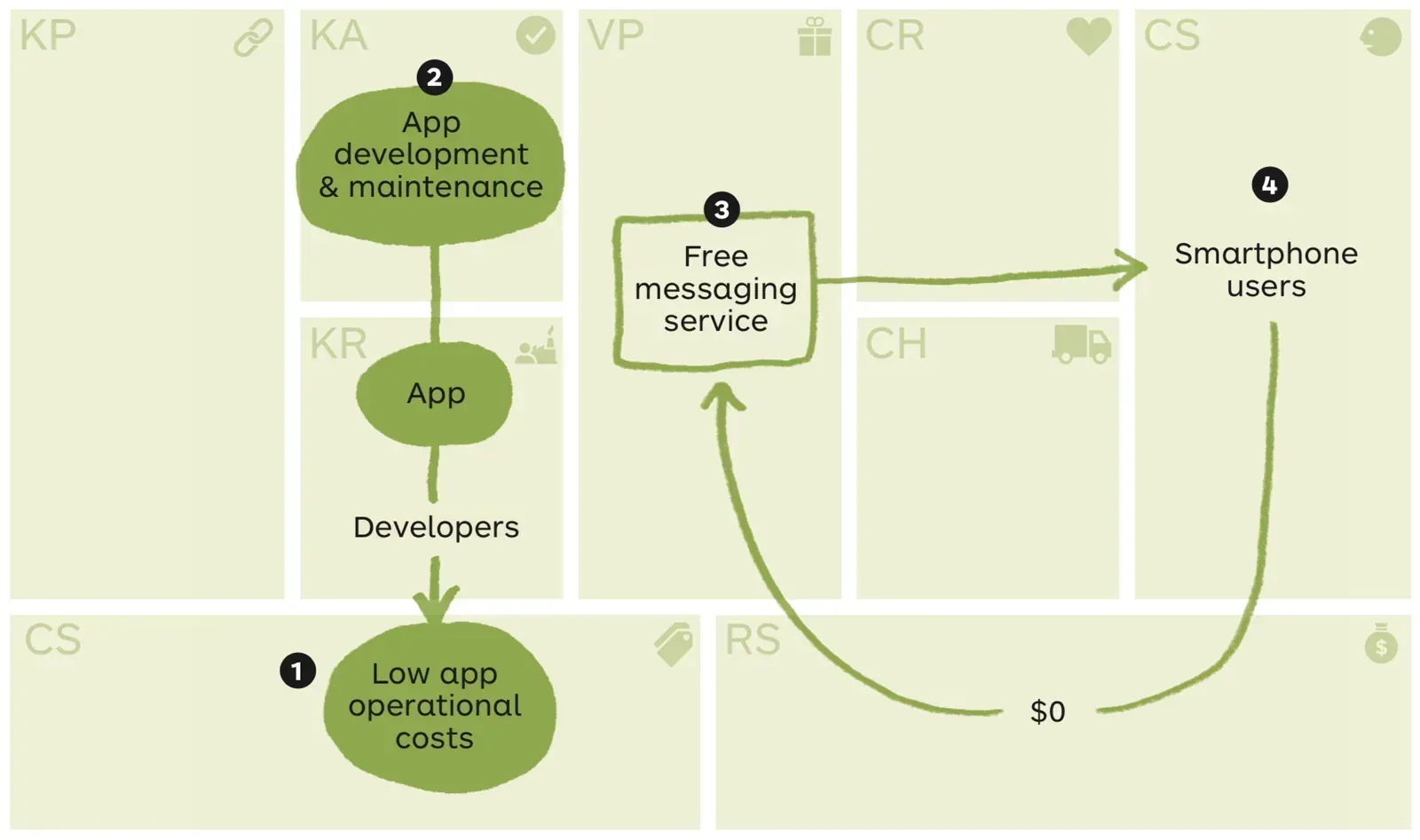
1. Identify an industry cost and revenue structure that you can disrupt with tech
Telecom operators charge an estimated 6,000% markup for SMS messages. WhatsApp disrupts this revenue stream with a free service.
2. Build the technology
In early 2009, Jan Koum starts working on a new type of Internet-based iPhone messaging app. Unlike SMS messages, which use a telecom operator’s network infrastructure, WhatsApp piggybacks on a user’s smartphone connection to deliver messaging for free.
3. Disrupt with a radically different cost structure
WhatsApp incurs no variable or fixed costs for messages sent by users. Its main costs are in software development, not infrastructure. With only a few software developers, it serves millions of users and destroys billions of dollars of lucrative SMS revenues for telecom operators in the process.
4. Reap the benefits
WhatsApp grows at a breathtaking speed without having to grow its cost structure substantially. In December 2013 WhatsApp claims they’ve reached 400 million active users with only 35 engineers.
+ Smartphone growth
WhatsApp focuses on mobile first and benefits from the rapid growth of the smartphone market. WhatsApp expands to multiple platforms and devices, but contrary to their free, desktop messaging competitors (like Yahoo! Messenger, MSN Messenger, and Skype) WhatsApp’s primary focus always remains mobile.