“Everyone knows we should do it, but no one does it.” This comment from one of our webinar participants perfectly captures the challenge many organizations face with innovation. Just like physical fitness, we know innovation is crucial for our long-term health, but establishing a consistent practice remains elusive.
In our first webinar of 2025, we explored how organizations can build sustainable innovation capabilities without breaking the bank. Here are the key insights that emerged.
Innovation is like physical exercise
The parallel between innovation and physical fitness is striking. Both require:
- Consistent practice rather than sporadic efforts
- A structured program rather than random activities
- Clear goals and metrics to track progress
- Accountability partners to maintain momentum
Just as you wouldn't expect results from random exercises at the gym, innovation success requires a systematic approach. Our research shows that companies often struggle not from lack of ideas or resources, but from inconsistent practice and unclear processes.
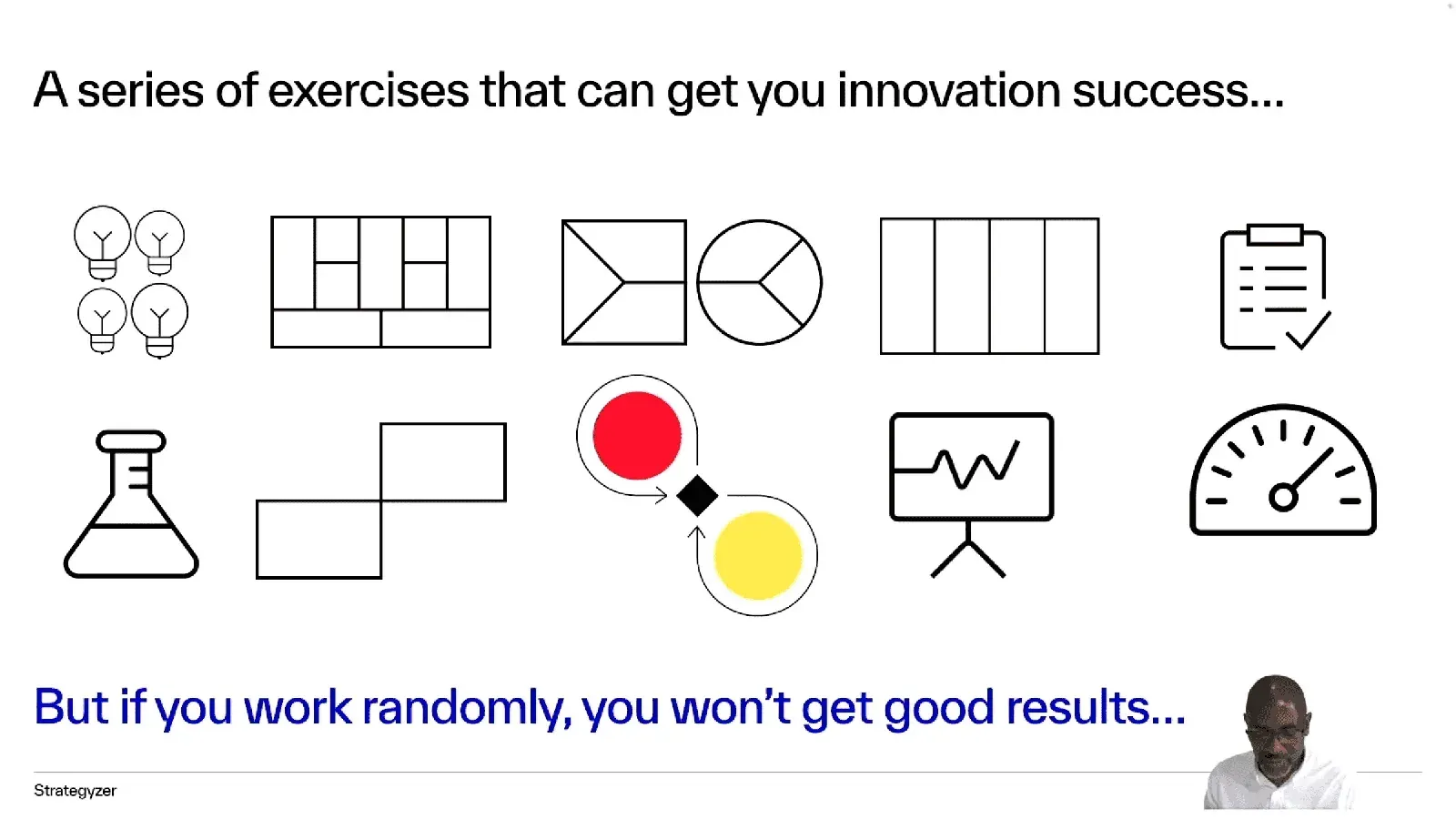
Just as you wouldn't expect results from random exercises at the gym, innovation success requires a systematic approach.
The three pillars of innovation fitness
To build innovation capabilities that last, organizations need:
1. An agreed process for innovation activities
- Clear pathways for progressing new ideas
- Defined approaches to innovation that align with company goals
- Structured support systems for innovators
2. Transparent funding mechanisms
- Well-documented processes for accessing resources
- Clear criteria for investment decisions
- Staged funding aligned with evidence of progress
3. Efficient decision-making frameworks
- Regular check-ins with leadership
- Evidence-based assessment criteria
- Quick feedback loops for teams

Breaking through common barriers
Our experience working with SMEs has revealed that companies often struggle with three main challenges:
- Bureaucracy overload: Many organizations burden their innovation efforts with heavy processes. The solution isn't abandoning structure but making it serve the innovators. Programs should reduce work, not create it.
- Resource allocation: Companies often let too many projects run too long. Data shows we should be comfortable killing 70% of projects after three months. This requires objective metrics and clear decision-making frameworks.
- Scale-up support: Discovery is just the beginning. Scaling validated ideas requires different capabilities and often more investment than the initial discovery phase. Success demands continued leadership support and new skill sets.
Making it work in practice
The key to sustainable innovation is treating it like a fitness program:
- Start with clear goals
- Follow a structured program
- Track progress systematically
- Build in accountability
- Celebrate small wins
- Adjust based on evidence
Our data shows that teams with specific check-ins and accountability partners have a 95% higher chance of achieving their innovation goals compared to those working in isolation.
Our data shows that teams with specific check-ins and accountability partners have a 95% higher chance of achieving their innovation goals compared to those working in isolation.”
Moving forward
Just as you wouldn't expect to get fit without a proper training program, you shouldn't expect innovation success without the right structure and support. The good news is that you don't have to figure it all out on your own.
Want to learn how our Innovation Management Platform can help your organization get fit for innovation? Our platform includes proven programs, accountability frameworks, and decision-making tools that help teams move from idea to impact efficiently. Get in touch to discover how we can help you build sustainable innovation capabilities in your organization.
About the speakers
Dr. Alex Osterwalder
Entrepreneur, speaker, and business thinker
Alex is the inventor of the Business Model Canvas, used by more than 200,000 companies across 178 countries. He is co-author of Business Model Generation, named one of the Financial Times' top 10 most-cited business books. He ranks number four on the Thinkers50 list of global management thinkers and has won the Thinkers50 Strategy Award. He has spent two decades coaching senior leaders at organisations including Bayer, Bosch, WL Gore, Honeywell, and Mastercard.
Dr. Tendayi Viki
Author, speaker and advisor
Senior Partner at Strategyzer and author of multiple books on innovation and strategy. Tendayi regularly leads strategy workshops for Fortune 500 companies, helping leadership teams navigate disruption and make bold decisions with confidence.
Carol Hill
Associate Partner and webinar host
Carol is an Associate Partner at Strategyzer. Before joining, she led innovation programmes inside organisations like the LEGO Group and Pearson PLC. She brings the perspective of someone who has applied this work inside large enterprises, not just taught it.